


Dagma Day connects science, market experts, and consultants to support decision-making for the next crop season in Brazilian agriculture
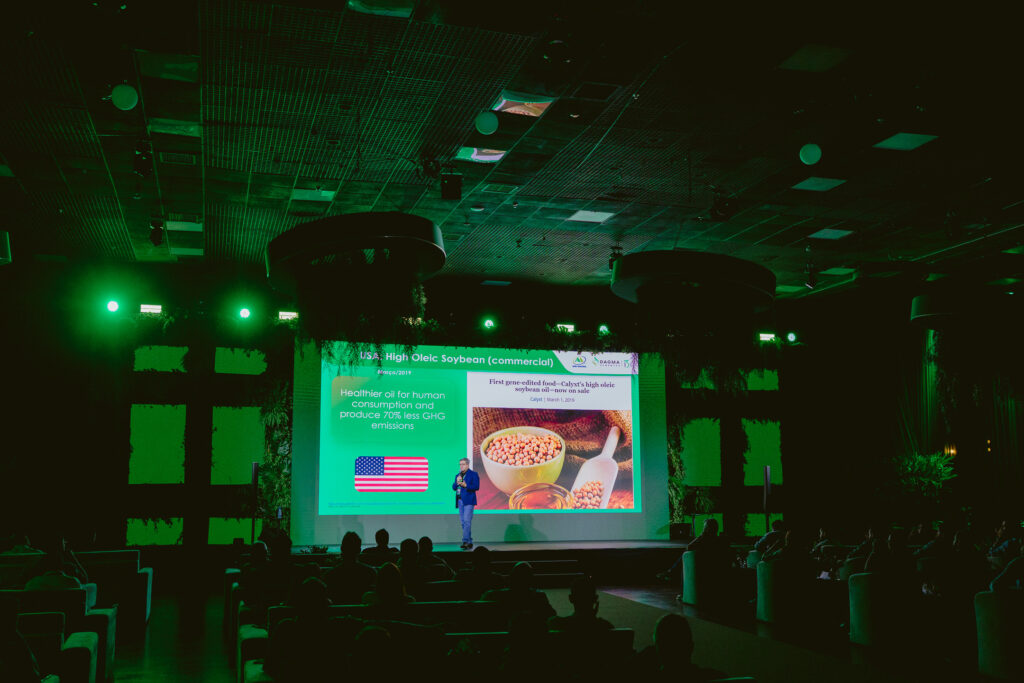
On April 1, Agro Amazônia held Dagma Day in Cuiabá, Mato Grosso, a technical event that brought together consultants, researchers, and specialists to discuss the main challenges and trends for the upcoming crop season. With 120 participants, including more than 60 consultants from 10 Brazilian states, the event was designed as a knowledge-sharing environment focused on supporting decision-making in the field.
The initiative marks the fifth anniversary of Dagma Sementes, developed in partnership with GDM, and reinforces the brand’s positioning as a reference in innovation, technology, and productivity. More than a celebration, Dagma Day was conceived as a strategic movement to connect science, the market, and agricultural practice, strengthening technical recommendations and expanding access to qualified information.
“Dagma Day was designed as an exclusive event for consultants, who are on the front line of decisions in the field. By bringing this audience together with leading specialists, we created a high-level environment that directly contributes to safer decisions and to the future of agriculture,” said Roberto Motta, President and CEO of Agro Amazônia.
Over more than eight hours of programming, the event addressed topics such as biotechnology, genetics, crop management, and seed quality, with a focus on the practical application of these concepts in daily farm operations. The proposal was to discuss not only established solutions, but also trends and challenges still emerging in the sector.
According to Elisamara Caldeira, Agronomy Manager at Agro Amazônia, the event was created out of the need to bring the main difficulties currently faced in the field to the table.
“The idea was not to repeat familiar topics, but to promote discussions about what is happening now and what is still to come. We are experiencing important changes, especially related to climate stress, crop management, and genetic evolution, and consultants need to be prepared for this,” she explained.
In this context, Dagma Day also positions itself as a space for anticipating future scenarios, especially in light of the challenges expected for the 2026/27 season, such as changes in rainfall patterns, rising temperatures, and increased weed pressure.
Among the highlights of the program was Alexandre Nepomuceno, General Head of Embrapa Soybean, one of the event’s speakers, who addressed the evolution of biotechnology and the advancement of gene editing as the next frontier of agriculture.
“Events like Dagma Day are fundamental for connecting science with producers. Knowledge is the main tool for decision-making, and we are living through a true technological revolution, especially in genetics,” he said. According to him, new technologies are expected to expand productivity and sustainability gains in the coming years, requiring greater technical preparation from consultants and producers.
Also speaking at the event, Tomas Hasing, Managing Partner of Digital Biology at The Traits Company, highlighted the role of innovation and data analysis in crop development.
“Research needs to be connected to the field. Events like this are essential for bringing science closer to producers and the market. Today, through computational biology, we are able to analyze thousands of genomes across different environments and turn this data into practical solutions for agriculture. When we bring together different profiles, such as researchers, consultants, and market professionals, we create an environment that accelerates innovation and generates faster answers to agriculture’s real challenges,” he said.
Dagma Day’s core audience was consultants, recognized as key players in technical recommendations and in spreading technologies throughout the field. For Agro Amazônia, investing in the qualification of this audience is essential to expanding the impact of the solutions developed.
“This is a technical event, with no commercial focus, created to share knowledge and strengthen trust-based relationships. Consultants multiply information and play a fundamental role in the experience producers will have in the field,” said Viumar Joenck, Seeds Director at Agro Amazônia.
The goal is to position Agro Amazônia as a partner in this process, contributing to more assertive decisions and greater predictability of results, especially in a scenario of increasing pressure on costs and profitability.
Over the last five years, Dagma has consolidated a robust portfolio, with varieties adapted to the different regions where Agro Amazônia operates. The strategy involves not only genetic development, but also investments in production, logistics, and quality.
“Dagma has been growing and evolving, helping producers achieve increasingly higher productivity levels. Our goal is to expand this presence even further and strengthen the brand in the Brazilian market,” said Edmarcio Lopes, Commercial Vice President of Agro Amazônia.
Facing a challenging outlook for the next crop season, marked by high costs and greater operational complexity, security has become one of the main decision factors in the field.
“Farmers cannot afford mistakes. Security and risk mitigation are fundamental at this moment, and that means working with reliable partners, with a consistent portfolio and delivery capacity,” reinforced Viumar.
For Agro Amazônia, Dagma Day also represents progress in the company’s brand positioning strategy, which seeks to consolidate itself not only through product quality, but also through knowledge generation and closeness to the market.
“The building of Dagma over these five years has been based on technology, consistency, and relationships. The event was created precisely to strengthen this positioning, connecting those who develop technology with those who are in the field,” said Marcelo Cassiolato, Marketing Vice President of Agro Amazônia.
By bringing together specialists, consultants, and different perspectives from across the sector, Dagma Day reinforces the role of knowledge as the foundation for safer decisions and more consistent results in the field.
More than a technical gathering, the event establishes itself as a space for connection, contributing to the development of Brazilian agriculture and to building an increasingly efficient, productive, and sustainable farming sector.